
If you are exploring dental veneers at Valley Dental Turlock, one of the first decisions you will face is whether to choose porcelain or composite. Both can transform chipped, stained, or uneven teeth into a bright, even smile, but they differ in cost, durability, the number of visits involved, and how each one is placed and maintained over the years.
This guide breaks down the differences so you can walk into your cosmetic dentistry consultation with Dr. Tannaz Ahmadi already knowing which option may suit you best. New to the practice? Our new patient page explains what your first visit looks like.
How porcelain veneers work
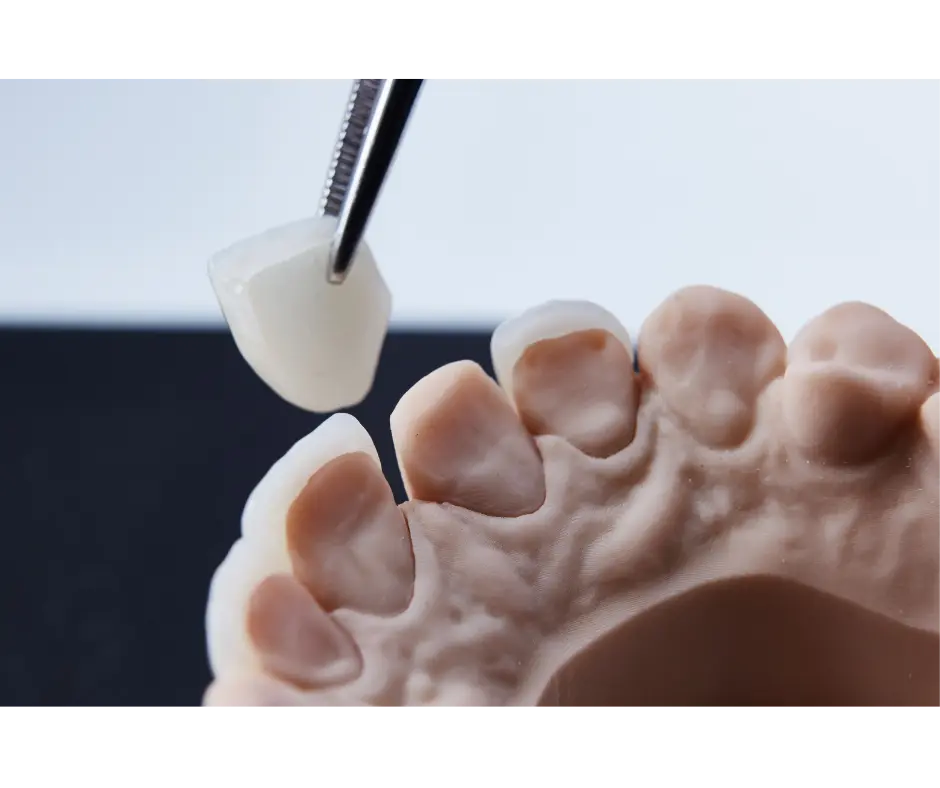
Porcelain veneers are thin, custom shells crafted in a dental lab and bonded to the front of your teeth. Because porcelain mimics the way natural enamel reflects and transmits light, the results look remarkably lifelike, with a depth and translucency that resin struggles to match. Placement usually takes two visits: one to gently shape the teeth and take impressions, and another to bond the finished veneers once the lab has crafted them to your chosen shade and shape. Between visits you typically wear temporary veneers so your smile stays presentable. Porcelain is highly stain resistant because its glazed surface does not absorb pigment the way natural enamel can, so it tends to keep its color even if you enjoy coffee, tea, or red wine.
How composite veneers work
Composite veneers use a tooth-colored resin, the same family of material used in tooth-colored fillings, that the dentist sculpts directly onto your teeth and hardens with a curing light. This often means a single visit and a more budget-friendly price, since there is no separate lab fee or waiting period. Composite is gentler on your natural tooth structure because less enamel usually needs to be removed, and small chips can often be repaired chairside without redoing the whole veneer. The trade-off is that resin is softer than porcelain, so it can pick up stains and wear at the edges over time and may need occasional polishing or touch-ups to stay looking its best.
What to expect step by step
Whichever material you choose, your treatment starts with a consultation where Dr. Tannaz Ahmadi examines your teeth and gums, listens to your smile goals, and confirms you have enough healthy enamel. For porcelain, your first treatment visit involves conservatively shaping the front of the teeth, taking impressions or a digital scan, and placing temporaries. The lab then handcrafts your veneers, and you return to have them bonded, checked for fit, and polished. For composite, the dentist applies and sculpts the resin in layers during a single appointment, curing each layer before shaping and polishing it to a natural shine. We always check your bite before you leave so the veneers feel comfortable when you chew and speak. Curious who you will be working with? Meet Dr. Ahmadi on our team page.
Comparing cost, durability, and appearance
- Cost: Composite veneers usually cost less up front; porcelain is a larger investment.
- Durability: Porcelain is stronger and longer lasting; composite is more prone to chips and stains over time.
- Appearance: Porcelain offers the most natural, translucent look; composite looks great but may not match porcelain’s luster.
- Time: Composite can often be done in one visit; porcelain typically takes two.
- Repairs: Composite is easy to touch up; porcelain usually requires a new veneer if damaged.
If you are also weighing teeth whitening or clear aligners to address color or alignment, we can fold those into your overall smile plan.
Caring for your veneers either way
Both materials reward the same daily habits. Brush twice a day with a non-abrasive toothpaste, floss gently around each veneer, and avoid using your teeth to open packaging or bite your nails. If you grind or clench at night, a custom nightguard is one of the simplest ways to protect your investment, since grinding is one of the most common causes of chipped veneers. Keep up with routine cleanings and exams so we can polish your veneers, check the bonded margins, and keep your gums healthy where they meet each veneer. Composite veneers may benefit from an occasional professional polish to refresh their shine, while porcelain typically holds its luster on its own. Limiting heavy staining drinks like coffee, tea, and red wine helps composite hold its color longer, and rinsing with water after them is an easy habit that makes a difference. Avoid abrasive whitening toothpastes that can scratch the surface over time. With consistent care, both materials can reward you with years of confident smiles.
Which option is right for you?
The best choice depends on your goals, budget, and the condition of your teeth. Porcelain is often ideal for a long-lasting, premium result that resists stains for years, while composite is a great fit if you want a more affordable, conservative, single-visit option you can update later. During your visit we discuss financing options and review whether other treatments, such as crowns for heavily damaged teeth, might serve you better. We never push the more expensive route; we recommend what fits your mouth and your priorities. Ready to start? Book an appointment or reach out and we will help you decide.