
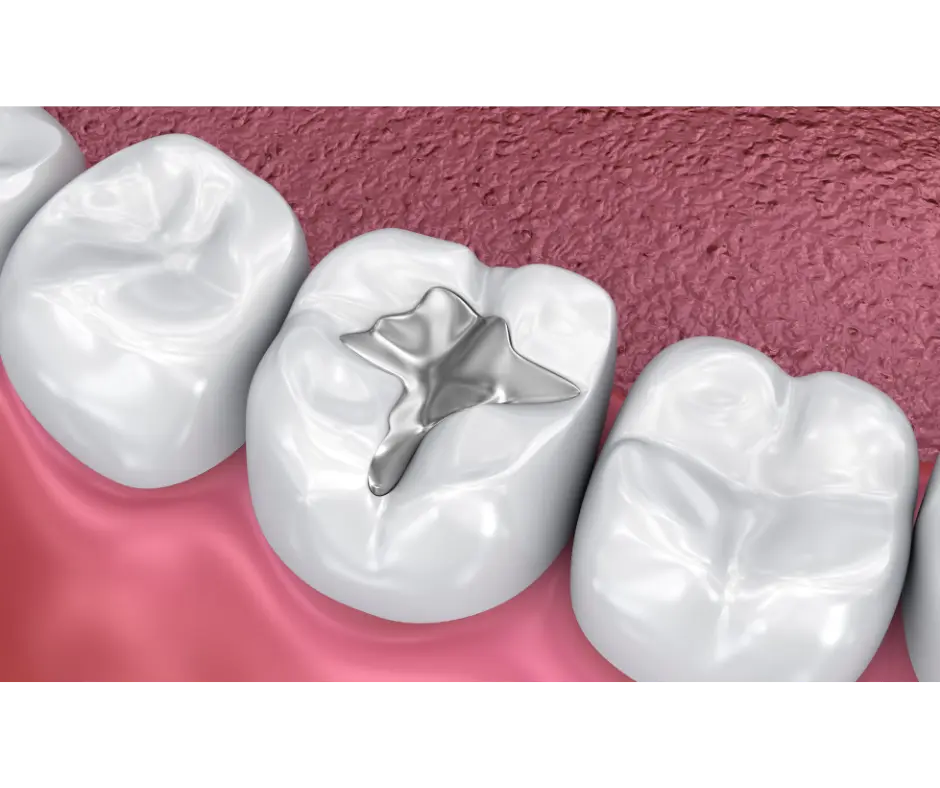
A common question we hear about dental fillings at Valley Dental Turlock is how long they last. With good care, tooth-colored composite fillings often last around 7 to 10 years, while metal amalgam fillings can last 10 to 15 years or more. Your daily habits and checkup routine play a big role in where you land in those ranges.
Here is what affects that lifespan, how you can help your fillings go the distance, and what happens when one finally wears out.
What affects how long a filling lasts
- Location and size: Larger fillings and those on heavy-chewing molars wear faster.
- Material: Amalgam tends to last a bit longer than composite, though both perform well.
- Oral hygiene: Brushing and flossing prevent new decay around the filling edges.
- Habits: Grinding, chewing ice, and biting hard objects can crack fillings. A nightguard helps if you grind.
- Regular checkups: Routine exams let us catch a worn filling before it fails.
No two mouths are the same, so these ranges are averages rather than guarantees. A small filling on a well-cared-for front tooth may outlast the typical estimate, while a large filling on a molar in someone who grinds may need attention sooner. The good news is that almost every factor on this list is something you can influence with daily habits and regular visits.
How to make your fillings last
Treat a filled tooth like any other, with a few smart habits to protect the restoration. Brush twice a day with fluoride toothpaste, floss daily to keep the edges of the filling clean where new decay tends to start, and limit sugary or acidic foods and drinks that feed decay and wear down enamel. Avoid using your teeth to crunch ice or open packaging, since sudden force can crack a filling. Keep up with routine cleanings and exams so we can monitor the filling and the tooth around it and catch wear early. If you grind your teeth at night, a custom nightguard protects both your fillings and your natural enamel from the repeated pressure that shortens their life.
Habits that wear fillings out faster
- Grinding and clenching: Repeated force fatigues fillings and can crack them; a nightguard helps.
- Chewing hard objects: Ice, hard candy, pens, and popcorn kernels can chip a filling.
- Skipping flossing: Plaque at the filling margins invites new decay underneath.
- Frequent sugar and acid: Constant snacking and acidic drinks weaken the surrounding enamel.
- Missing checkups: Small problems go undetected and grow until the filling fails.
Avoiding these habits is the simplest, least expensive way to get the most years from every filling.
Does the material change the lifespan
Material does play a role, though it is rarely the deciding factor. Metal amalgam tends to last a little longer on heavy-chewing molars because it stands up well to constant pressure, which is why those ranges run a bit higher. Tooth-colored composite has improved enormously and now performs very well across the mouth, with the added benefit of bonding to the tooth and blending in naturally. For most patients the difference in everyday durability is modest, and the choice comes down to appearance, the location of the tooth, and personal preference. Whatever the material, your habits and checkup routine matter more for longevity than the filling itself. If you are weighing your options for a new filling, we are happy to compare them with you and recommend what suits each tooth.
Signs a filling needs replacing
Fillings do not last forever, and replacing one early is far easier than treating new decay underneath. Contact us if you notice sensitivity to hot or cold, pain when biting, a rough edge you can feel with your tongue, a visible crack, dark staining at the margin, or a piece that has come loose. If decay has spread under an old filling, we may recommend a larger restoration such as a crown, or a root canal if the nerve is affected. You can always reach out with concerns.
What replacing a filling involves
Replacing a filling is a routine, comfortable procedure much like getting the original. We numb the area, remove the old filling and any decay that has formed beneath it, then place fresh material and shape it to your bite. Because some additional tooth structure is often removed in the process, a replacement filling may be slightly larger than the first. If too little healthy tooth remains to support a filling, a crown is the next step, and if decay has reached the nerve, a root canal followed by a crown protects the tooth. We will explain what we find and discuss financing if needed so you can plan. When something feels off, book an appointment sooner rather than later.