
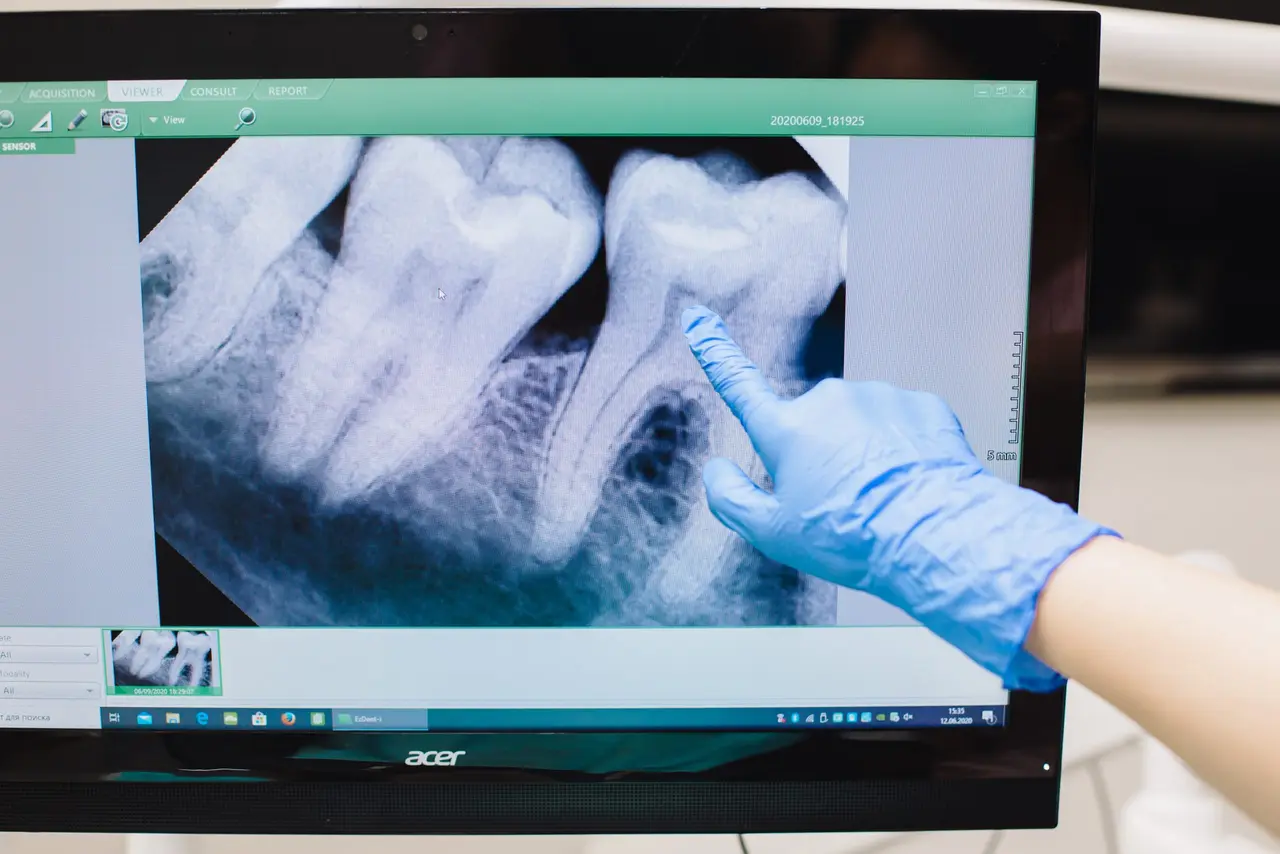
If your dentist has mentioned a bitewing or panoramic X-ray, you may have wondered what the difference is. Each type of dental X-ray is designed to show something specific, which helps us diagnose problems accurately.
At Valley Dental Turlock, we choose the right X-ray for the job so we get the information we need with the least exposure. Here is a simple guide to the most common types.
Bitewing X-rays
Bitewing X-rays are among the most common images taken at routine checkups. You gently bite down on a small tab while the image captures the upper and lower back teeth in one view. Bitewings are especially good at revealing decay between teeth, where a visual exam cannot reach, and at showing how the upper and lower teeth meet. They also help us monitor bone levels related to gum disease.
Periapical and panoramic X-rays
A periapical X-ray focuses on one or two specific teeth from crown to root, which is useful for diagnosing issues like infection or for planning a root canal. A panoramic X-ray, by contrast, captures your entire mouth in a single wide image, showing all the teeth, the jaws, and surrounding structures. Panoramic views are helpful for evaluating wisdom teeth, planning dental implants, and getting a big-picture look at your oral health.
Other imaging you may encounter
- Occlusal X-rays: Show a broader view of the floor or roof of the mouth, often used to track tooth development in children.
- Cone beam 3D imaging: Provides a detailed three-dimensional view used for complex treatment planning, such as implants or extractions.
Not everyone needs every type. We select the imaging that fits your specific situation.
What to expect when an X-ray is taken
Having a dental X-ray is quick, simple, and painless. Here is what usually happens:
- You are positioned and shielded, often with a lead apron and thyroid collar for added protection.
- A small sensor or tab is placed in your mouth, or for a panoramic image the machine rotates gently around your head while you stand still.
- The image is captured in seconds, and with digital sensors it appears on screen almost instantly.
- We review it together so you can see exactly what we see and ask any questions.
Because the images are digital, we can enlarge and enhance them on screen, which makes it easier to spot small problems early and to explain your treatment options clearly.
How we decide which X-ray you need
The right X-ray depends on your age, symptoms, dental history, and what we are evaluating. A routine checkup may call for bitewings, while a specific problem or a treatment plan may call for a focused or panoramic view. New patients often have a baseline set taken so we have a complete starting point to compare against over time. We always aim to gather the information we need while keeping exposure low. If you have questions about your imaging, request an appointment at Valley Dental Turlock or contact us and we will be glad to explain.