
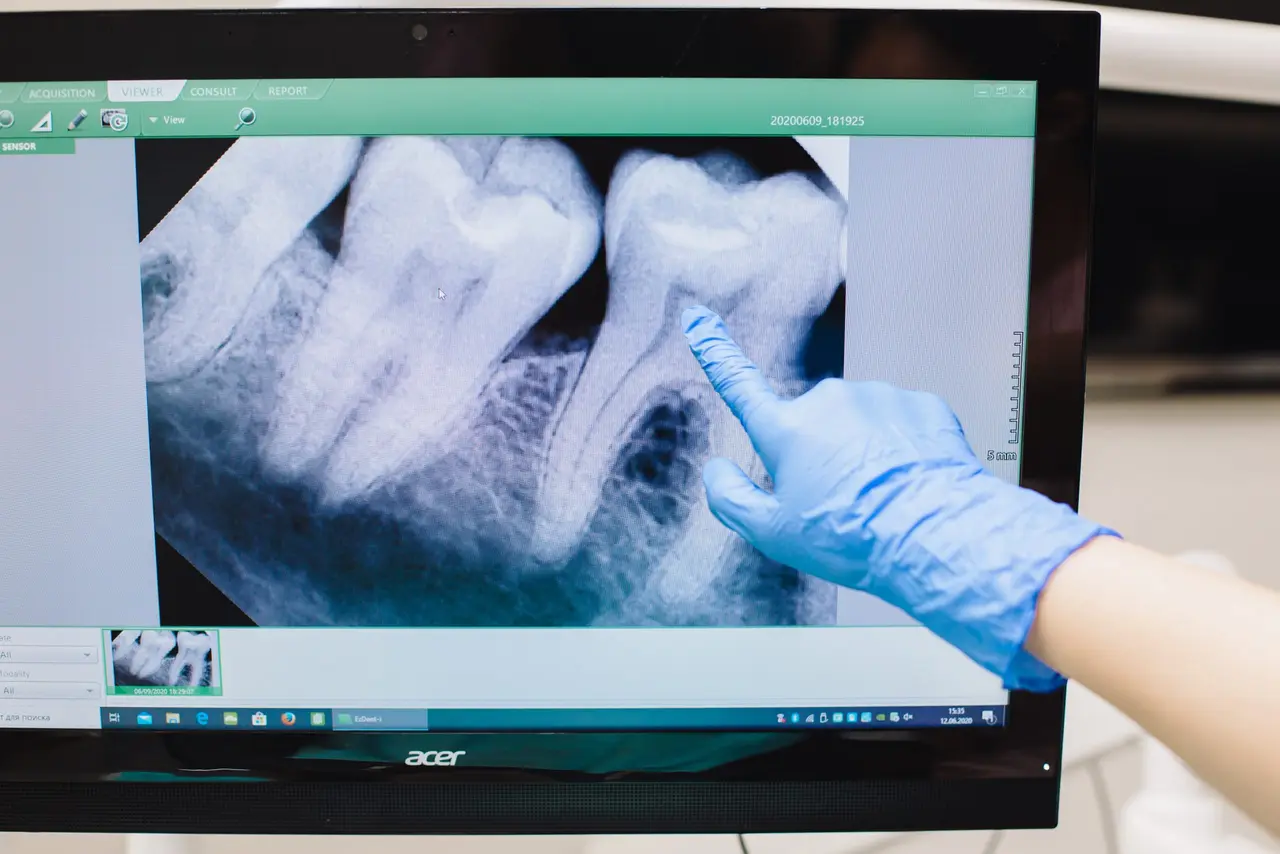
It is natural to wonder about safety when it comes to anything involving radiation, and dental X-rays are no exception. The reassuring answer is that modern digital X-rays are considered very safe and use a remarkably small amount of radiation.
At Valley Dental Turlock, we use digital X-ray technology and careful safety practices to keep your exposure as low as possible. Here is what you should know.
Why digital X-rays are so low in exposure
Digital X-rays have largely replaced older film X-rays, and they use significantly less radiation to capture an image. The amount of exposure from routine dental X-rays is very small, comparable to the natural background radiation we all encounter in everyday life from sources like the sun and soil. Because the dose is so low and the images appear instantly, digital technology is both safer and more efficient than the film methods of the past.
How we keep you protected
- Protective shielding: We use a lead apron and thyroid collar when appropriate to shield the rest of your body.
- Only when needed: We take X-rays based on your individual needs, not on a fixed schedule for everyone.
- Modern equipment: Digital sensors require far less radiation than older film.
- Trained team: Our team follows established safety guidelines to minimize exposure.
These steps reflect the widely used principle of keeping radiation as low as reasonably achievable while still getting the information needed for your care.
Putting the exposure in perspective
One of the most helpful ways to think about dental X-ray safety is to compare it to the radiation we all live with every day. Our bodies are exposed to small amounts of natural background radiation from the sun, the air, the soil, and even the food we eat. The dose from a routine set of digital dental X-rays is very small in comparison, which is part of why dental organizations consider these images a low-risk part of preventive care. Other everyday activities, such as spending time at higher altitudes or taking a long flight, also involve modest radiation exposure that most people never think about. Seen in that context, the carefully limited exposure from a needed dental X-ray is minor, and the diagnostic value it provides is significant.
Why dental X-rays are worth it
X-rays let us see what the eye cannot, including decay between teeth, infection at the root, bone loss from gum disease, and problems below the gumline. They are essential for planning treatments such as root canals, dental implants, and extractions. Catching these issues early often means simpler, less costly treatment, so the small amount of radiation is generally well worth the diagnostic benefit.
X-rays during pregnancy and for children
Dental X-rays are considered safe for children when needed, and the same low-exposure, shielded approach applies. If you are pregnant or think you might be, let us know. We can often postpone routine X-rays and will take extra precautions if imaging is necessary. We are always happy to discuss your concerns. To learn more or schedule a visit, request an appointment at Valley Dental Turlock or contact us.