
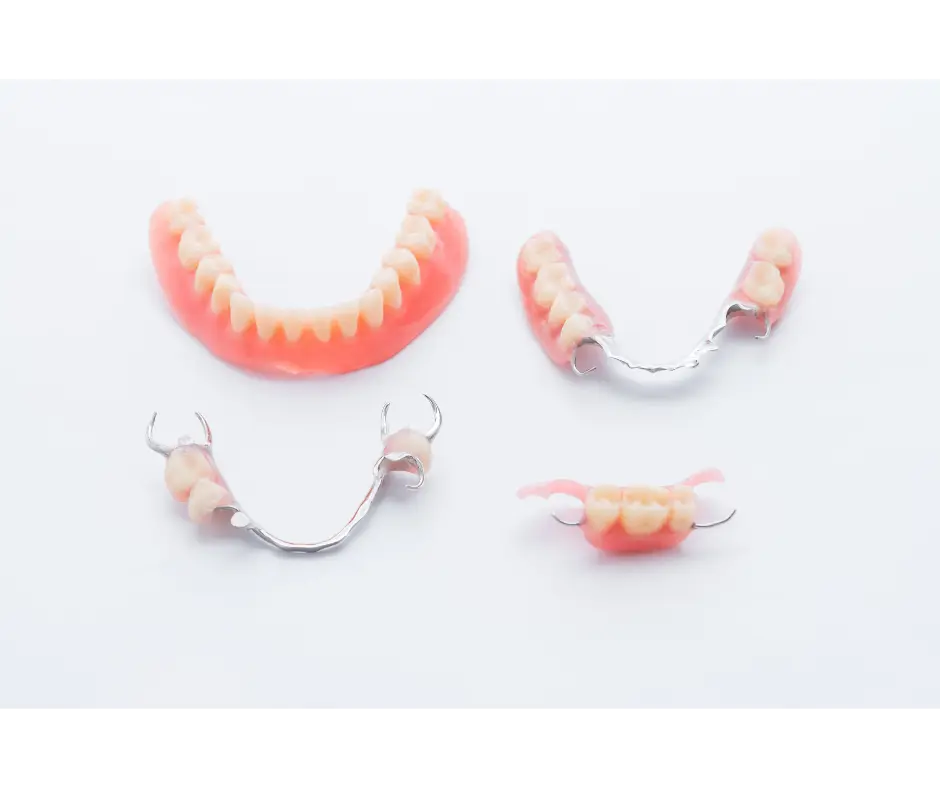
If you are missing some or all of your teeth, dentures are a comfortable, affordable way to restore your smile and your ability to eat and speak. At Valley Dental Turlock, the two main types we provide are full dentures and partial dentures. The right one depends largely on how many teeth you still have.
This guide explains the difference so you can feel confident about your options before your consultation.
What are full dentures?
Full dentures replace an entire arch of teeth, either the upper, the lower, or both. They rest on the gums and are custom-made to fit the shape of your mouth, restoring your smile and supporting your facial structure. Full dentures come as conventional dentures, made after the gums have healed from any extractions, or immediate dentures, placed the same day teeth are removed so you are never without a smile. Full dentures are a great option when all the teeth in an arch are missing or need to be removed. For more stability, some patients choose implant-supported dentures, which combine dentures with dental implants.
What are partial dentures?
Partial dentures are used when you still have some healthy natural teeth. They fill the gaps with replacement teeth attached to a gum-colored base, and they often clip onto your remaining teeth with small clasps to stay in place. Partials restore your bite and keep your natural teeth from shifting into the empty spaces, which protects your overall alignment. They are removable for easy cleaning, and they look natural when you smile. A partial can also be a more affordable choice than replacing several individual teeth.
Comparing full and partial dentures
- Who they suit: Full dentures replace a whole arch; partials fill in gaps when some teeth remain.
- Support: Full dentures rest on the gums; partials often attach to natural teeth.
- Care: Both are removed daily for cleaning and soaking.
- Comfort: Both take a short adjustment period as you get used to them.
- Alternatives: Implants, bridges, or implant-supported dentures may also be options.
Cost and financing
Cost is one of the most common questions, and it varies with the type of denture, the materials used, and whether any extractions or implants are involved. In general, partials and conventional full dentures are among the more budget-friendly ways to replace missing teeth, while implant-supported options cost more but offer greater stability. Many dental insurance plans include a benefit toward dentures, so it is worth reviewing your coverage. We also explain payment and financing options so cost is never a barrier to a confident smile, and our new patient page covers what to bring to your first visit.
Which option is right for you?
The decision usually comes down to how many teeth you are replacing and the health of your remaining teeth and gums. During a consultation with Dr. Tannaz Ahmadi we examine your mouth, review your X-rays, and discuss whether full dentures, partials, or an implant-based solution best fits your needs and budget. When you are ready to talk through your options, book an appointment or contact us with your questions.